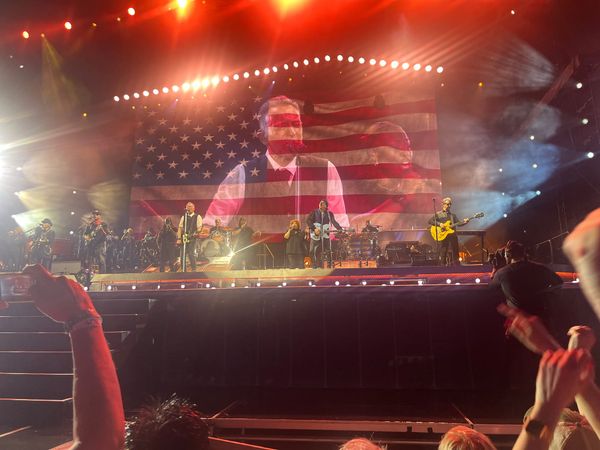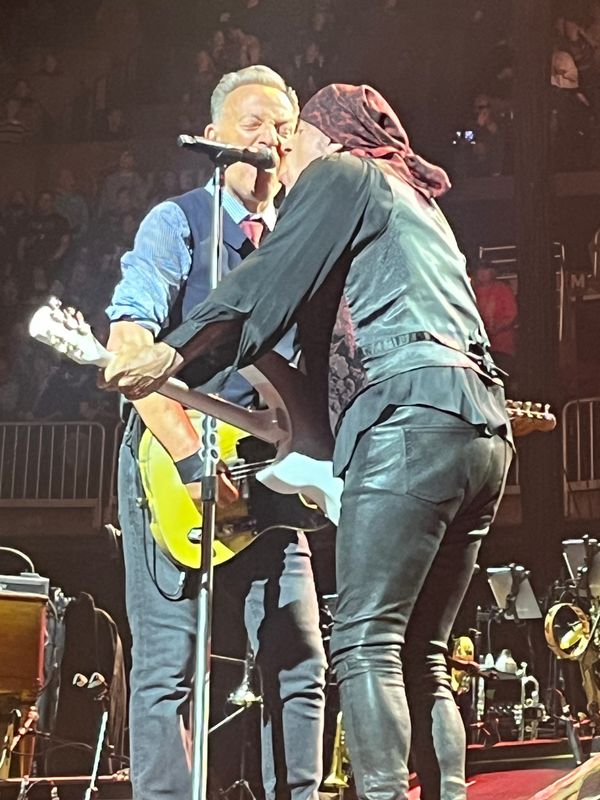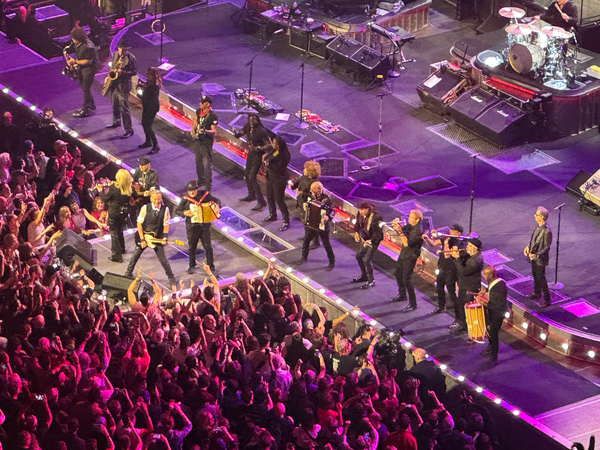
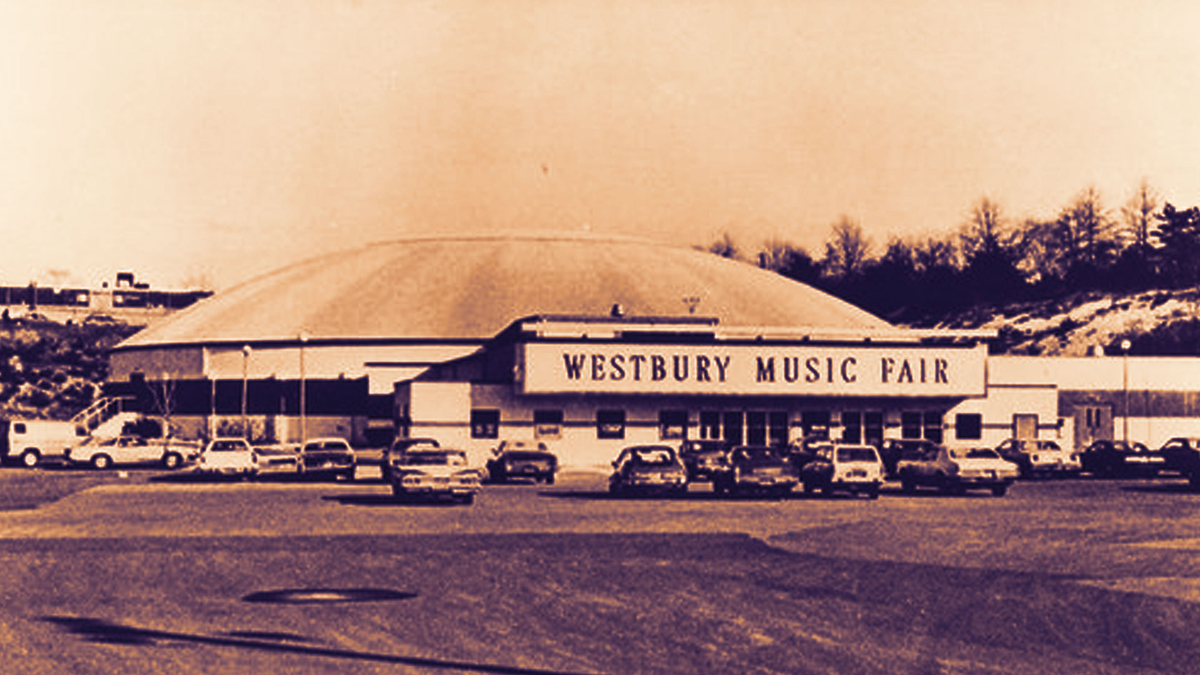
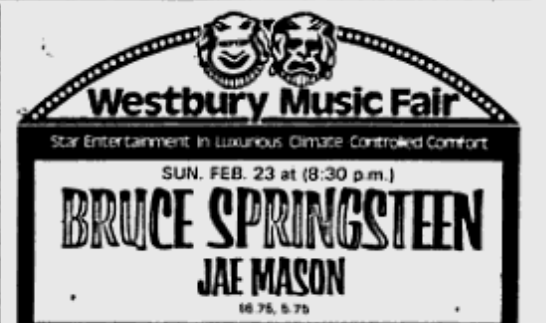
Bruce Springsteen & the E Street Band, Westbury Music Fair, Westbury, NY, February 23, 1975
“Rosie, where do we rock?”

Setlist: INCIDENT ON 57TH STREET / SPIRIT IN THE NIGHT / BORN TO RUN / THE E STREET SHUFFLE / GROWIN' UP / IT'S HARD TO BE A SAINT IN THE CITY / I WANT YOU / SHE'S THE ONE / JUNGLELAND / KITTY'S BACK / NEW YORK CITY SERENADE / ROSALITA (COME OUT TONIGHT) / 4TH OF JULY, ASBURY PARK (SANDY) / A LOVE SO FINE / FOR YOU / WEAR MY RING AROUND YOUR NECK / QUARTER TO THREE
The E Street Band at this moment is Roy Bittan, Clarence Clemons, Danny Federici, Garry Tallent, and Max Weinberg. Suki Lahav appears as a guest musician.
Venue capacity: 2,870
The fourth-to-last show of the Wild, Innocent & the E Street Shuffle tour is this Sunday night on Long Island. One of the long-circulating bootlegs of this show is titled “The Greatest Performance.” While the folks that traffic in recordings of illicit origin are often given to hyperbole in order to move product, in this particular case it was 100% accurate. The E Street Band’s performance at Westbury Music Fair was absolutely one of those legendary ‘75 performances that both rewarded the long-time followers and pulled any doubters in hook, line and sinker.
It’s another concert where Bruce clearly planned for it to be some kind of statement. At the Main Point, it was on the radio, in Philly, and a benefit. On Long Island, not necessarily your hottest hotbed of Springsteen fandom back in the day – this show was not sold out! – there was something about this date that made Bruce want to make it into something extra. This begins with the possibly apocryphal request to then-manager Mike Appel for a ferris wheel. There are other new elements to the show that we’ll discuss shortly, and I’ll come back to the ferris wheel.
The evening is introduced with warnings against smoking and a welcome to someone who had come over “all the way from England,” before the musicians made their way onstage and tuned up. Roy begins the show with that riff that incorporates “Thunder Road” before cascading down into “Incident.” Suki threads her violin notes alongside the piano, and the audience goes silent, only to applaud loudly again, briefly, once Bruce sings the first line. Bruce’s vocal delivery is particularly masterful, he has so much control but he is also fully inhabiting the song emotionally. I understand why no one in the audience is making any noise. It is entrancing listening to a medium-grade audience tape. I can’t imagine what it was like to be there.
The dynamics of his voice in these lines: “Upstairs a band was playing, the singer was singing something about going home” - he’s in full soul singer mode, instantly filling the room and commanding it even more than he had been. But then he switches tone and volume and emotional timbre: “She whispered, ‘Spanish Johnny, you can leave me tonight, but just don't leave me alone,’” it’s so quick, it’s so effortless, it’s astonishing. There are similar beautifully executed transitions throughout the whole song and it is spellbinding. You don’t want to breathe too hard in case you’ll ruin it.
Suki’s violin takes us out and there’s a tremendous eruption of applause. They know what they saw. But then there’s the bass and bells and sax and drum crashes and the whole atmospheric conjuring that can only lead into “Spirit in the Night,” with a skronk and a drum roll and then Clarence is into the opening sax riff and the audience kind of purrs in response. Bruce’s initial delivery is declaratory, in my mind I’m seeing him on the edge of the stage, walking around, landing the lines in different directions.
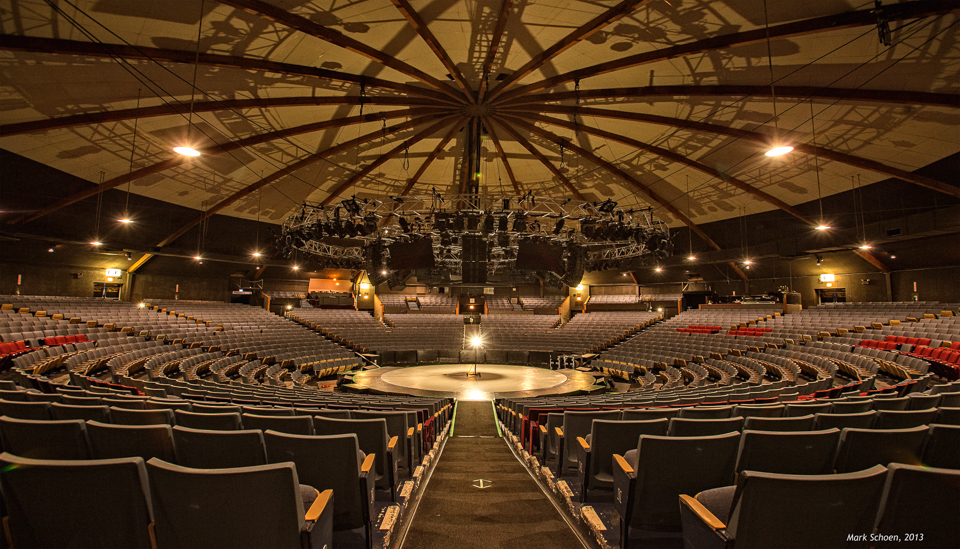
Westbury Music Fair was unique in that it was one of those in the round venues, with a revolving stage. I don’t know if you’ve ever seen a rock concert in the round before, but I did (Trevor Rabin-era Yes at MSG. I went because a friend had no one else to go with) and I hated it. It might have been better if it was a band I liked and definitely in a situation where I hold an appreciation for each band member’s individual contribution. It must be weird for the performer as well, you don’t have a front row, you have a constantly changing perspective on the audience. In any event, the stage is what I attribute to Bruce’s “Spirit” vocal approach.
On the last verse, there’s a moment where you hear a guy in the crowd yell “SHIRT!” as Bruce is working his way down that particular line, and the audience laughs in support. Like it was genuine pent-up enthusiasm and not an attempt to be a hambone. Or maybe it was both? It could be both.
“DO IT,” yells a guy near the taper as there’s some guitar-adjustment going on. “This is a song it’s gonna be, I think it’s gonna be released as a single in a few weeks, and it’s called borntorun,” said just like that. Bruce mumbles so badly that another guy near the taper says, “What’s it called??” just as the band runs head-first into a frantically paced “Born to Run.” He’s still not comfortable with it yet, and the band aren’t either; I can’t hear Danny and Max is way too busy with the hi-hat. It’s so fast. Danny finally shows up in the mix in the last chorus.
All of this is interesting because the song has been done since the previous August and has been broadcast on FM radio around the country since November, when Bruce showed up at WMMR in Philly and played it on Ed Sciaky’s show. There was so much demand for new Bruce Springsteen in certain markets that other radio stations around the country were playing recordings of the Ed Sciaky broadcast in order to meet demand. Here in February 1975, Bruce is telling everyone that the single is coming out but we have to remember that they’re releasing the single because they think the record is almost done!
[Editor’s note: The record is not almost done]
This performance of BTR in particular does not sound like someone who is excited and proud of his upcoming record. It sounds like someone who is a little on edge. Which we all now know is an accurate representation of Bruce Springsteen’s state of mind at that time.
Stick on the snare drum edge. Click. click. click. The organ slides in, the audience recognizes it. The second keyboard comes in and everyone settles back for storytime. It sounds like the taper, or someone near the taper, is opening a can of Pringles or a box of TicTacs. Meanwhile, Clarence and Bruce are chatting back and forth between the horn and the guitar, loose and languid, until they both land on one single note that rises up in volume, almost like a siren, and they slide back into the main groove of the song, towards the actual melody, bringing in the rest of the guys -- there’s Garry! -- and then Bruce begins, in a hoarse whisper:
“There I was, standing on this dark side street, three in the morning, down in Asbury Park."
Long Island applauds in approval. There’s some specific yelling that I can’t decode.
“Then, all of a sudden, like, down at the end of the street I saw this big dude in a white suit (laughter) shades on – it was raining, the middle of the night. I walked down to the end of the street, he was just standing there, put out his hand."
The crowd laughs like they’re in on the joke, so you imagine a certain white suited saxophone player acting out the part.
“Threw all my money on the ground, threw my jacket on the ground…” and without missing a beat, he begins, still in the hoarse almost-whisper: “Sparks fly on E Street….” before shifting back into singing the words. When he sings, “When the manchild gives them the double-shot,” there’s a noise like breaking glass. I can’t tell if it’s a sound effect of some kind, but it definitely sounds artificial. We know there is film of this show because footage from “Spirit In The Night” was shown at a TeachRock fundraiser in August of 2024 courtesy Thom Zimny, so hope springs eternal that we’ll get the answers to these kinds of questions at some point in our lifetimes.
Bruce continues, “Them schoolboy pops pull out all the stops on a Friday night,” but then you hear him off-mic talking with the audience and I think what he says is, “I messed up the words,” which is why there’s a smattering of laughs and good-natured applause. Clarence invokes “East Coast muscle” when the time comes. Bruce finds his groove in the second verse and focuses his delivery a little, which doesn’t take away from the overall feel, it just imbues it with more energy and forward movement. The song is 12 minutes long. It won’t hurt anything if it moves with a little more alacrity. The guitar solo helps with that, a lot, it starts kind of casual but then shifts into staccato bursts before the bridge.
“E Street Shuffle” will soon retire because “10th Avenue Freeze-Out” will become the Bruce + Clarence Story, a tighter, more compressed retelling that aligned more with the musical direction of this mark of E Street and the direction that Bruce’s songwriting was going. It wasn’t just about compression but his mastery of that particular tool is one of the elements that elevated him as a songwriter. The images are sharper, more indelible, it is a form of editing, it is paring your words to the essentials.
But back to the song. Bruce sings the line about our hero slipping on his jeans, and then drops back into conversational mode: “He puts on his sneakers, he puts on his shirt, he puts on Roy Orbison’s Greatest Hits for a little - inspiration, he locks up his house, turns on his car, runs over to Angel’s, rings the doorbell--”
*ding dong*
(The audience is a big fan of this unnecessary gimmick. I definitely think a synthesizer is the culprit, probably a Mellotron, given the crashing noise earlier in the song.)
“And together, they move. on. down. to the scene.” E Street comes in with a Sam Cooke chorus from “Havin’ A Party,” there’s a suitable sax solo, and then the tape cuts off and brings us in at the end of the story that preceded a brisk and lively “Growin’ Up,” which barely catches its breath before a breakneck yet precise “It’s Hard to be a Saint in the City” that pretty much peels the paint off the walls.
“I was the king of the alley, man, I could talk some TRASH,” Bruce declares, with especial emphasis, setting the tone. Everyone in the band deserves mention here, razor-sharp guitar slices, warm sax, Roy and Danny making all sorts of magic together – especially on the bridge! it’s amazing – and the rhythm section holding firmly onto the steering wheel so no one goes off the road, and then everyone sliding back just the slightest in time for the guitar interlude. It’s less a solo than just an elevated moment for this particular instrument, while everyone else keeps doing their own thing in their own very distinctive way to move this song along and they pick up the pace more and more into a kind of whirling dervish to end the thing.
It’s even more amazing that they go from that into “I Want You,” just from a setlist pacing perspective. Bruce feels a little scattered at the beginning but if anything he picks up intensity as the version progresses and it turns into a different, more desperate, a more pleading version of this Dylan cover. Listen to it at about the 4:30 mark, the way the violin and the keyboards are locked into a circular melody that sounds both like a carnival and this side of insanity, it perfectly captures the emotion of obsession and yearning and it maintains that interdependence all the way until the end, where Bruce is whisper-singing the lyrics until the end and it breaks your fucking heart.
As they tune up for the next number, there are shouted requests and Bruce says, “We’re gonna get to these songs,” which of course just encourages additional yelps until you hear the riff, tentative at first until it’s definitely not. Writing a setlist that segues from “I Want You” into “She’s The One” is both evil and genius, and Bruce will make this match for the next couple of shows before they wind live work down so they can focus on finishing the goddamn record.
STO is still evolving lyrically but damn he knows what he wants it to FEEL like, it's never less than an oncoming locomotive live. Part of that is whatever is in his head, but the other part of it is just the Bo Diddley beat. It is high and feral and wild and Roy Bittan here at the end is somehow leading the entire band, they are just following his lead, bold and commanding and fierce as hell. Goosebump inducing 50 years later. The audience loses its shit at the end and there are well-deserved cries of WOW from the crowd.
The “For You” requestors can be heard in the next tuning break and when Bruce announces the next song, there’s definite applause of recognition but there’s also a reasonable chance that a lot of folks in the audience haven’t heard it yet. It’s time for “Jungleland.” Suki’s violin is exquisite, Roy’s piano intro is beautiful, and just as he begins the melody for the verses, there is a new and different instrument.
I do not mean to blaspheme by talking about something other than the performance during “Jungleland,” but we have to talk about the symphonic chimes. I feel comfortable in asserting that most of the audience had never heard “Jungleland” before – remember that repeat attendees are not more than 1% of your average concert – and so no one knows that this isn’t normally part of it. Maybe if you’d never heard “Jungleland” before you would just think “oh okay” but man I had not listened to this show in a long time and when I got to this part of the tape I almost fell out of my chair, laughing hysterically.
Part of this is because I remembered that an old Springsteen pal used to refer to Westbury as “the fucking doorbell show” (you need to say that with a Brooklyn accent). He never remembered the venue or the date, just the fact that for reasons that escape all of us, Bruce decided to adorn “Jungleland” with tubular bells and deploy them whenever it seemed appropriate.
Someone on the crew had to go out and acquire this instrument to be used in this show (and possibly ones that follow for which there is no recording). Was there one backstage at Westbury and they decided to bring it onstage? I don’t think this is a synthesizer, even on the medium-grade audience recording you can hear someone striking the chime. I would be glad to be wrong, either way it’s still challenging to experience.
So now let’s go back to the ferris wheel. Bruce’s request had entered fan lore by the late 70s. Maybe it got mentioned in an early interview, because I remember having this conversation with some people in my row in Hartford on the first River tour. There was no ferris wheel because Appel rightly informed Bruce that it would cost about as much as his take from the show to acquire such a device.
When this story was finally confirmed by Appel in in his memoir, I’ve always wondered why Bruce would go to such lengths for a show that was at the end of the Wild & Innocent tour. His head was already at least partly in the next record, and whether or not at this point in 1975 he had an over-arching concept for the new album solidified in his mind (my personal opinion: he did not) it’s the kind of set piece that would have made sense while touring WIESS. Okay, it would not have made financial sense at all but thematically it would have been easy to understand that he was trying to recreate the feeling of the boardwalk to accompany his stories about it.
Part of me has wondered if the request for the ferris wheel was some kind of weaponized challenge between Bruce and a manager he was already beginning to have doubts about. E.g., if you’re really such a great manager, then get me a ferris wheel! But coming back and immersing myself in the recording again and its new and novel sound effects made me realize that for whatever reason, there seemed to be some concept around this show Springsteen had in his head. For that I’m going to blame the fact that Westbury Music Fair started its life as a giant circus tent, which was problematic because it was on the flight path for JFK. Tents are not very soundproof!
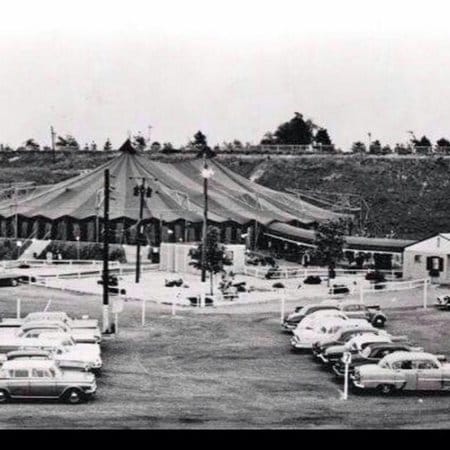
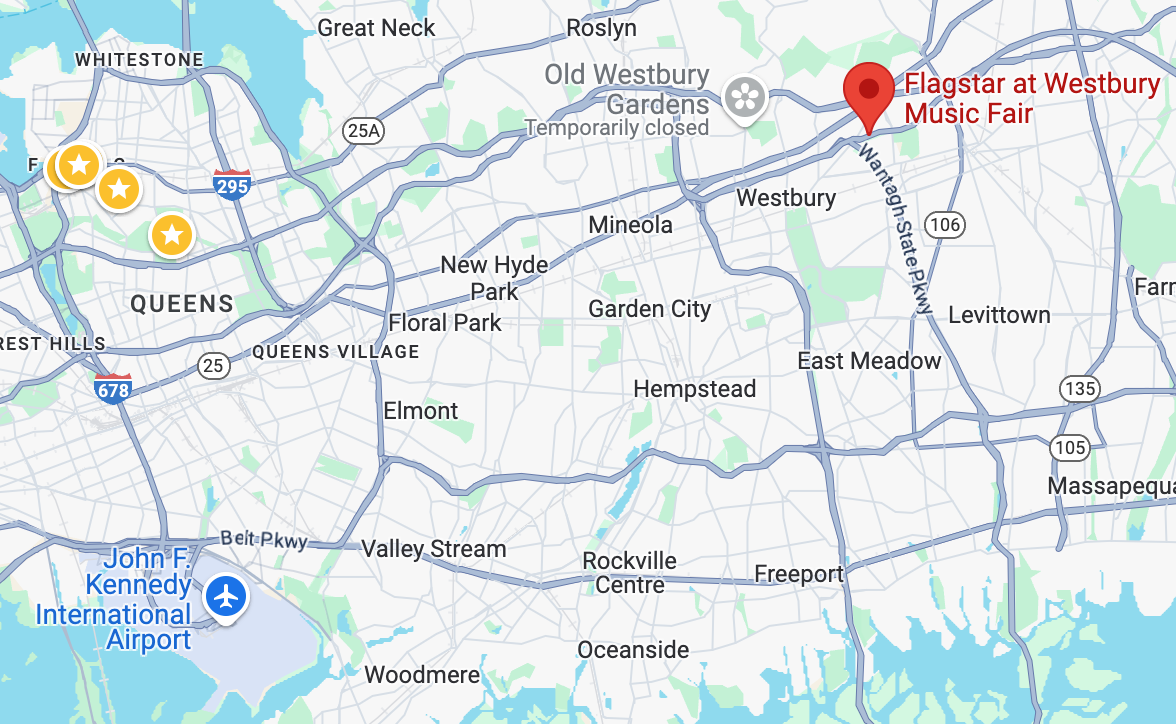
aforementoined circus tent, and a visual depiction of the venue's proximity to JFK for those unfamiliar
And the Magic Rat drove this beautiful machine / over the Jersey State line
Joe Long Island: YEAH
Whoever is playing the chimes continues to play them with great solemnity, and you know, to me, “Jungleland” is like a gospel song, it is holy and sacred and a prime example of Bruce Springsteen’s greatness and the bells are taking me right out of that mindset. Tonight at Westbury Music Fair the song is a little scruffy around the edges, there is a fair amount of dissonance on the bridge that is definitely not intentional, Max is out of sync with a lot of what’s going on and is way too busy the rest of the time.
Again, none of this is meant as criticism, this is just an observation of what is going on during this show during a song that is still reasonably new, he’s still working on it, they don’t actually finish “Jungleland” until the very last day of recording Born To Run in July. And I love hearing the genesis, the development, the experiments, the lyric changes, the clams, and those parts of the song that were already grabbing an audience and holding them at pin-drop-silence attention, like on the final verse here.
BRUCE, WE LOVE YOU, declares an audience member as E Street tunes for the next number.
Bruce’s initial sustain at the end of the opening riff is insane and the entire band are all so immediately on point, at rapt attention, at the start of “Kitty’s Back.” It is astonishing. The vocal delivery is rapid-fire but still fluid, rolling, loose. There’s a little more urgency than usual, but it fits, it still makes sense, but it does transform “Kitty” into something more intense in a different way.
That’s particularly noticeable when it’s time for Danny and Roy to trade riffs, which has familiar melodies and motifs but a much brisker, more deliberate feel than your average “Kitty.” The sax solo is untamed; there’s an interlude where Bruce is trying to cue Max with differing levels of success, but then Bruce and Clarence start singing Sam and Dave’s “Soothe Me,” it’s just a line, I wish it would go on forever. But then… here she comes, and all is forgiven.
What I hear in this version of “Kitty’s Back” is a desire to continue to grow and innovate and not just play the same song in the same way. It’s a favorite, it’s a centerpiece, it’s one of the epic numbers that they made their bones on, it’s the kind of thing where they could scale things back a little bit and it would still be fantastic. But they’re just not built that way. Even at the end, the very end, it is the outro but Clarence and Roy are just killing it until the very last note.
The same kind of aural world-building and scene setting that was executed at the intro to “Spirit In The Night” is filling the space and Bruce whispers, “It’s midnight in Manhattan.” The audience applauds with intent: they know what this means. A little bit more vibe-conjuring, Bruce sings “Hiding on the backstreets,” then just vocalizes wordlessly as the drums and percussion are building, you hear him count the band in, the whirling dervish created dissolves and everyone settles into their parts.
Listen for Roy, who’s playing some angular jazz riffs. Listen to Suki, bringing a particular kind of light and color into the song that he’s never found a way to duplicate, even with an entire string section at his disposal. And then we’re at the end of the first verse and Bruce declaims, “So walk tall…or baby, don’t walk at all,” and everyone explodes again, like that moment in a fireworks display where you’ve seen the individual little lights working up to the grand finale. It’s so enormous and overwhelming, it seems impossible that there are only seven musicians on that stage. But they are all also each individually willing this specific universe into existence for these 20 minutes.
The spoken word interlude that we heard at the Main Point is still part of it, he's more conversational tonight, it’s inaudible at parts on this recording but you can still feel the rawness and vulnerability. It’s so incredibly soft and open and there are two important things happening. One is Bruce’s relationship with the audience that lets him get to this place and the other is his skill as a bandleader that he can both have the band following him with such precision and he can still put himself into this emotional delivery.
“Maybe we could slip away…maybe we could steal away…maybe we could slip away…” It’s about escape but it’s also about refuge, it’s about how the city lets you hide in plain sight. There’s an interview Bruce did with a European journalist in 1975 where he talks about getting off the bus at Port Authority and how “you’re somebody else. Or you’re who you are. It was an escape, a good escape.” All of this is in here.
It’s also like frames in a film noir, footsteps in the alley, working girls on the corner, he’s whispering now, Clarence is shadowing him softly but deliberately. Someone’s hitting those chimes quietly but even that can’t ruin this moment. These grand expanding arpeggios come back for that last chorus, they are every color of the rainbow, every musician on that stage is executing their parts with strength and aplomb. It is epic. It is promise. It is beyond stunning.
The bell is back.
BONG BONG BONG BONG
“Rosie, where do we rock?”
“Rosalita” was always such a party, such a declaration of intent, a ritual guaranteed to engage the entire E Street Band at the heights of its power, a moment for the audience to lose its collective marbles, to clap and scream and shout along. The audience goes nuts at the break. You can hear a guy yelling, “COME ON! COME ON!” It was like high octane, guaranteed to make you want more. “Sandy” is a picture postcard, but the real killer is this insane version of “A Love So Fine.” I bet if you asked Bruce after this show if this song was going to be on the next record he would have told you yes, of course. I mean, just listen to it. This isn’t a throwaway! The introduction is like a rocket being launched, there’s the bridge with the call and response that was just made for some audience participation, there’s the vamp at the end, there’s room for Clarence to go nuts, Max gets to show off -- this was written to be a showstopper, and then it just got left on the cutting room floor.
[When I saw him do this at Convention Hall in 2003 it was one of those moments where you are just so incredibly stunned you cannot move – like, this song I used to listen to relentlessly as a teenager but then disappeared like it never ever existed until Tracks is now being performed live in front of me.]
Some day I will try to figure out why “For You” became such an insane fan favorite. All of these solo piano performances in 1975 are riveting but it will always strike me as such an odd placement. Everyone goes nuts when it’s done!
“We don’t quit so easy,” Bruce tells the crowd.
This is the time in the boot where you can just barely hear the people in the audience yell TURN THE STAGE. According to the entry in Brucebase from someone who attended this performance, they turned off the revolving stage mechanism during the encore. (This whole thing just gets funnier the more I think about it.)
“There have been many tough guys and many pretenders to the throne, many contenders, but there has only been one king!” Bruce declares, before launching into a version of Elvis’ “Wear My My Ring Around Your Neck.” Clarence is perfect but the MVP of this rendition is Garry Tallent, holding the floor rock-bottom. According to the Melody Maker’s Chris Charlesworth, who was at the show, Bruce jumps on the piano (he says ‘organ’ but we know better) in the middle of the Elvis tune. “Elvis Presley, Mister Elvis Presley!” Bruce says at the song’s conclusion, fighting to get in between all of the applause.
“This next song is a song, probably the greatest dance record ever, ever, ever, ever put to wax. That's right. It was recorded in the men's room of the Norfolk, Virginia railroad station -- that’s a true story -- back in the early 60's, and the guy who sang this, sang this song so high and so hard that we have to drop this down -- one, two, three, four, five, six, six keys, oh, right…Turn the stage, make the stage turn!” Now Bruce is joining Team Turn The Stage.
In the bridge, there’s the immortal utterance, “If you don’t dance to this one, slap yourself in the face, see a doctor, you may be dead.” A few more verses, and then we’re done. We’re done, right? Are you looking for your keys? It’s Sunday night, it’s been two and a half hours, we gotta be done, right?
“Brace yourselves!” NOPE.
"I’M JUST A PRISONER…OF ROCK AND ROLL. WE LOVE YOU.”
For a very long time, this was my favorite live version of “Quarter to Three” -- there was definitely some kind of compilation tape that went around that had this version of “Quarter to Three” and “A Love So Fine” and then a bunch of the Bottom Line covers. But when you own a few bootlegs they become your baseline, you think that it’s always going to be like that. Except they were actually true and correct in this case.
“Thank you so much! I had a helluva time!”
Listen or download: https://archive.org/details/bs1975-02-23.aud.parrot-records.flac16