Nebraska ‘82: Expanded Edition
Good night good luck / one two power shift

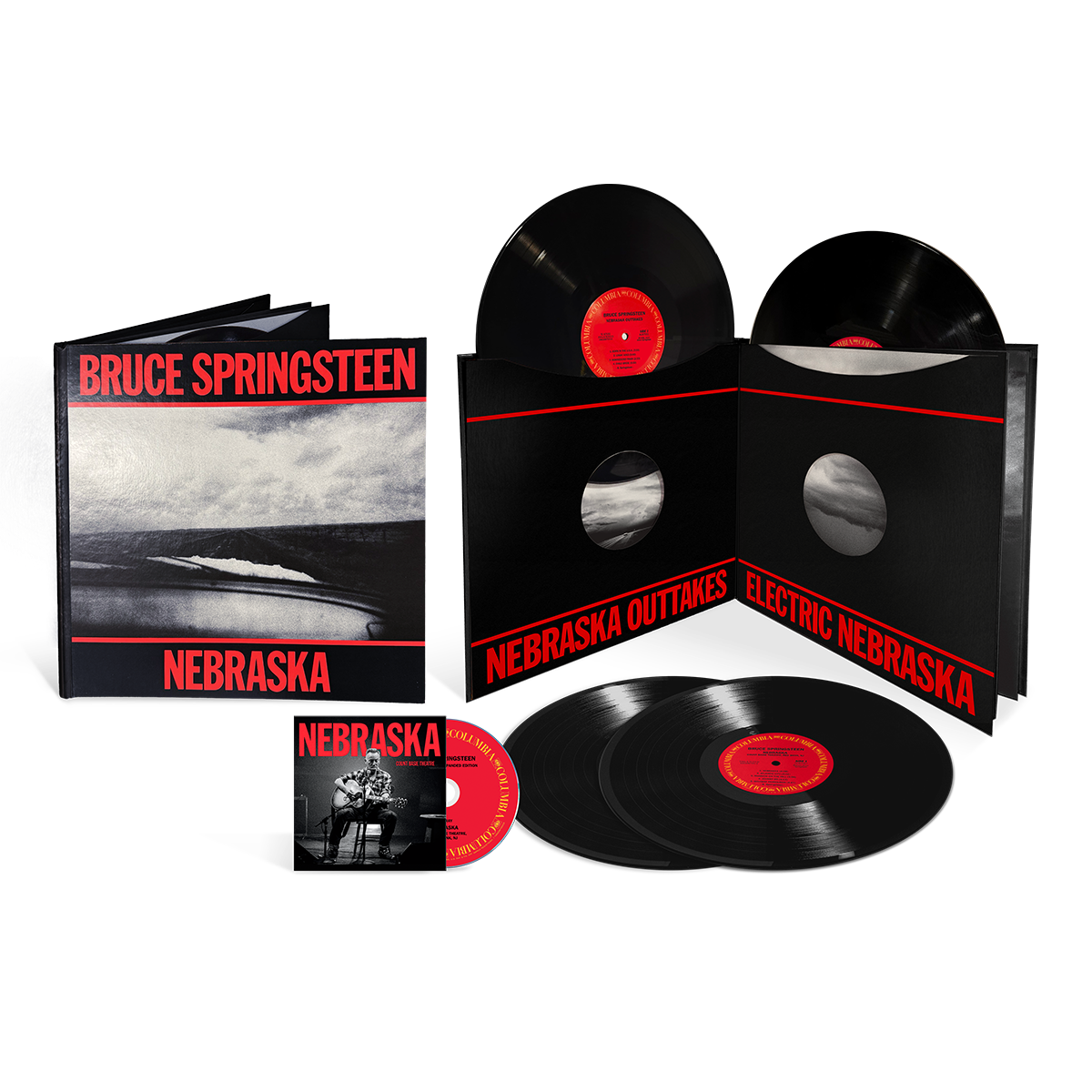
Welcome to Nebraska ‘82: Expanded Edition release day!
We’ve already covered the myth of Electric Nebraska and the live Nebraska film, so now let’s do a deeper dive into the outtakes discs before getting into an overall discussion about the set as a whole.
Nebraska Outtakes
I'd love to know more about the decisions behind what they decided was a Nebraska outtake and what wasn't. The one track that's in a gray area for me is "Johnny Bye-Bye." I know it was on Tracks and Tracks II but it's part of this story, and there's a version that was recorded at the Power Station in April 1982.
The blurriness of these borders points to 1) the need for liner notes and 2) supports the existence of a larger box set that encompasses the entire Nebraska and BITUSA era.
“Born in the USA”
Of course, we know this arrangement already from Tracks. But I think it's worth mentioning that there’s a connection between the delivery and attitude of some of the tracks from this time period - BITUSA, the breakneck “Downbound Train,” and “On the Prowl” (later “Downbound Train”), all of which reinforce the “‘State Trooper’ borrowed from Suicide” theory . We know that Bruce was paying attention to what was going on downtown. We know he drank vodka with Alan Vega in the men’s room at the Power Station. We know he hung out with Patti Smith. We know about his cameo on “Street Hassle.” We know he wrote a song for the Ramones. At the first Springsteen symposium back in 2005, I presented a paper on “Bruce Springsteen and Punk Rock” and the one question I kept being asked was why you couldn’t hear the punk influence within his music. Here you go!
“Losin’ Kind”
This is essentially a forerunner to “Highway 29,” and it’s an interesting example of where he’s got the thread of an idea and he’s trying to manifest it, but hasn’t quite shaped it enough. The striking elements in both songs are the small details and the specificity of them, but in “Losin’ Kind” they’re more pedestrian than how they get presented in “Highway 29”. The story here is also almost too linear, except when they go to the motel and then go commit the crime, which kind of doesn’t make sense. “Highway 29” is more impressionistic -- that last verse about the accident is just stunning -- while still highlighting the small details, with the added bonus that the narrator is less in denial. In “Losin’ Kind” he survives; in “Highway 29” you’re not entirely sure, and while it’s not as neat of an ending, the ambiguity gives the listener more to think about. It lingers.
“Downbound Train”
It’s kind of amazing that this version went from this breathless, urgent, punk-rock-adjacent reading into the forlorn, heartbreaking BITUSA rendition. The reason that it doesn’t work is that it doesn’t match the emotion of the lyrics. It’s clear that the narrator is agitated but we don’t believe him, nor do we actually understand why, because there’s no emotion behind it.
Compare that to how every time I hear this song live it breaks my fucking heart, even in the middle of another unannounced “surprise” full-album show, “Downbound Train” is always a highlight in its current form. In this form, we would have already forgotten it existed, because you don’t feel anything in either version, except maybe annoyed.
“Child Bride”
He took the best parts of this song and flipped it around into “Workin’ On The Highway,” which was the correct decision, because in its current form, it’s both gross (jokes about the Mann Act and jailbait were never funny) and uninteresting.
“Pink Cadillac”
Amazed that they didn’t try this in the Electric Nebraska sessions. This is just a wasted opportunity in this form.
“The Big Payback”
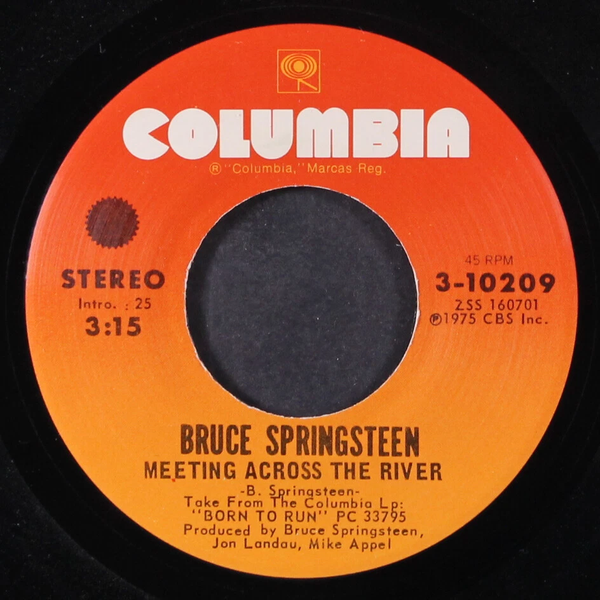
We already know this one as a b-side or as a track on Essential. Yet another song about a man doing manual labor before turning to crime, executed with a little more oomph. According to the notes for Essential, though, this was recorded after Nebraska. (I did not get access to any kind of liner notes with the advance so this may get updated once my [purchased] box set arrives.)
“Working on the Highway”
The minimalist intro, which is just Bruce, a harmonica, and light percussion on the body of the acoustic, is fantastic. The rest of the song is the same song we already know and…tolerate? It’s fine. But it definitely did not fit into the world of Nebraska.
“On the Prowl”
For an explanation of this track, the precursor to “Downbound Train,” let’s go to none other than the late Holly Cara Price (OBM), reporting for Backstreets from a Beaver Brown show at Big Man’s West on August 7, 1982:
“Tonight he might have surpassed any other small club appearance with two of the songs, “Lucille” and “Twist and Shout.” In the middle of “Lucille” he brought the band down and proceeded to close his eyes and relate a dream landscape in which he goes looking for his wild child but he can’t find her. It built in intensity until he finally plunged back into the song—this interlude soon grew into a whole song, “On the Prowl,’ on October 3.”
Here's Holly's report from a Cats on a Smooth Surface gig at the Pony on October 3, 1982:
“It wasn’t too crowded tonight, but everyone seemed to know subconsciously that this was the end of the magic. Bruce was soon to go to California to mix the next album. He did the second set again, and it was such a great night it didn't even feel like the end of the dream. But before “Twist and Shout” he turned to the band and said, “Let’s bring it home, boys,” and there was a slow fist squeezing my heart.”
“On the Prowl” is better than the thrash “Downbound Train”’s but the final version of the latter still wins. But “On the Prowl” is a perfect description of Bruce’s summer of clubbing in that era.
“Gun in Every Home”
This is the most interesting track in the entire collection. I think it doesn’t work in an acoustic presentation and the story probably needs some refinement, but the basic idea is absolutely fascinating. It wouldn’t have worked on Nebraska and it wouldn’t have worked on what BITUSA ultimately became, but it could have worked on Tunnel of Love. Or maybe it wouldn’t have fit anywhere, or maybe working on it to the point that it could have been a E Street Band song would have taken Bruce Springsteen in a completely different direction. In its current form it’s quietly subversive, and would have been the #2 song in his catalog that would have been completely misunderstood based on its presentation.
Put this on a record with “Held Up Without A Gun” and one of these versions of BITUSA and “Murder Incorporated” and maybe “Seeds,” and man, that’s a fucking album. That would also mean that BITUSA as we know it would not have existed and man, let’s stop to consider that alternative universe. (It’s worth mentioning that Charley Cross wrote a feature in Backstreets #47 about a world in which BITUSA is never released and instead we get a record called Murder Incorporated and I disagree with a lot of his concepts but applaud the creativity.)
Electric Nebraska
As previously noted, I wrote about this particular disc for the Guardian and still stand by the assessment that Bruce made the right decision at the time because this is underwhelming. I'm 100% glad and grateful to have it but don't think we missed anything by not having it until now. The Guardian piece was only 600 words so let's dig in:
“Nebraska”
As the introduction to the forbidden fruit, it’s initially underwhelming, but also? It’s a song about the Caryl Fugate and Carl Starkweather murders and the subsequent sentence of the electric chair. Like we’ll hear on “Johnny 99” later on, What’s ‘electric’ about it is basically a treatment that’s right out of the Tennessee Three: drums, stand-up bass, Roy Bittan hitting some chords. It’s an enhancement and a valid interpretation but it doesn’t improve on the demo.
“Atlantic City”
If you wanted to explain to someone why there was never an Electric Nebraska, play this for them. Given all of the years we’ve heard the E Street Band execute “Atlantic City” and how it became such a highlight of the live show, it is absolutely mind-boggling that they are struggling so hard here to find their way.
It removes the desperation and the darkness that’s always been there in every known version, even if at some points it doesn’t always dig deep -- I’m thinking of the version on Live in New York City, which is fine even if it lacks menace. There's just no room to breathe, they fill in all the spaces in a very basic and workmanlike way. But they’re just doing too much. Steve and Bruce’s harmonies on the chorus are kind of gorgeous, though.
Lyric changes worth pointing out out of respect for how small changes drastically improved them: “I got in too deep / and I could not pay” vs “I got debts no honest man could pay” and “I’m going down there half / but I’m coming back whole” vs “So put on your stockings, baby, 'cause the night's getting cold.” It’s good to have this now just to be able to observe the work in progress.
“Mansion on the Hill”
This is “electric” through the same basic Tennessee Three rhythm treatment along with some Hammond B3, piano, and electric guitar. The B3 is the most prominent, and this is a treatment that does enhance the song, but it still does the same thing that every other take has done, which is take the edge off, make it less lethal, less heart-breaking, less overwhelming. It still would not have stopped an exodus of people from leaving the seating bowl when it was performed.
“Johnny 99”
Here, we see the origins of the various high-energy versions of “Johnny 99” through the years. He always wanted it to be a bop! The delight here is Roy Bittan rocking out, doing his best Johnnie Johnson imitation. “Good,” Bruce says at the end. “Let’s try another one.” It’s interesting that he changes “Ford plant” to “auto plant” in the final version.
“Downbound Train”
What’s charming about it is how you can hear his breathing, he’s just spitting out the words in a style that he does not ever use. It's not “electric” so much as POGO NEBRASKA. I hope some punk band decides to take this one on. I tried to call this “Strummeresque” in my Guardian piece but couldn’t quite fit it in. But tell me it isn’t, that you couldn’t see Joe standing onstage, shouting this into a microphone.
“Open All Night”
It’s adorable, if kind of basic, and pretty much the arrangement we heard on the BITUSA tour. But I do like the tension on the bridge and they could have done a hardcore rockabilly rendition – but, again, the song is the song, there’s not that much you can do with it that hasn’t already been done.
“Born In The USA”
They’d still misinterpret it but it would be harder to do because it's less restrained than the ninth take. The guitar solo is amazing, and this is what everyone probably imagined the “Electric Nebraska” in their dreams would sound like. It is also very punk rock adjacent and the guitar solo is not the kind of thing he normally plays! I fucking love this and I would pay big money to see it. And the punk adjacency here is not something that Bruce Springsteen fans in 1982 would have been happy about either. They would have hated it as much as they hated the country influence.
“Reason to Believe”
I can’t believe I’m saying this but I find this version kinda cheesy. I don’t believe him! It neuters the attitude in the original and once again, it’s not “electric,” it’s another Tennessee Three-type adaptation.
While I love, love, love Nebraska, I’m not a huge fan of this release and I think the strategy behind it misses the mark in a big way. If it’s meant to capitalize on Deliver Me From Nowhere, anyone coming out of that and deciding they need to dig into this era of Bruce Springsteen isn’t going to start with an $80 box set. It’s overwhelming to consider if all you want to do is hear that tape that got carried around in Bruce’s shirt pocket.
Yes, streaming is a thing. But if you’re trying to create a new generation of fans, you release physical product for them to buy. There is data that proves that this is an accepted expression of modern fandom. It’s why Taylor Swift releases 27 different variations and people buy them. It’s why artists release LPs for fans to buy when many of them don’t even own turntables. You would think that Bruce Springsteen of all people would want to be part of that. An $80 box set does not invite those folks inside the room.
If Nebraska ‘82 is meant for Bruce Springsteen fans, then make a double disc with the outtakes and Electric Nebraska. The additions of the remastered record and the film do not enhance this story enough to justify their presence and the additional cost they add to the release. If you feel like the technology is going to let you fix problems with the original recording (which you should not do! we should leave it as it is!) then release it as a stand-alone so that you give new arrivals a low barrier to entry and let old-timers make a small purchase to replace the disc they bought in college. People do not have a lot of disposable income at the moment.
(I can't even weigh in properly as to whether the remastered disc is superior because there's nothing provided to journalists that tells us what fidelity we've been given advanced access to and so it's not a valid comparison. It also would not necessarily alter my opinion.)
Funny side story: when CDs first became a thing, there were publications doing service journalism to let people know whether or not a CD of an existing recording was worth the money. When Nebraska came out, there were many jokes about how it was ridiculous to own it on CD: “He recorded it in his bedroom. What, do you need to hear what was going on in the kitchen?” I am sure I am not the only one to make that joke at the time.
I am now more convinced than ever that what we really needed was a Born in the USA box that also included the Nebraska material. It is part of the same creative cycle, and that would have told a more compelling and complete story as well as provide a more accurately expansive perspective on Springsteen’s legacy than this does. But between Tracks 2 with its BITUSA outtakes disc and the accurate overlap illustrated on Nebraska ‘82, it sure seems like there is no intention or interest in compiling a definitive historical box set chronicling Bruce Springsteen’s best-selling record and the one that made him a global superstar. At least not while he is still around to talk about it and while the fans who came up with him in the 70s and 80s are around to enjoy it, and I think this is a travesty. It is a lost opportunity.
This is about history and legacy and not about personal preference. I got my box sets with The Promise and The River. While I thought the Dudes who were insisting we would get a major box set at the 35th anniversary were annoying (mostly because none of them actually had inside sources) I assumed that this was going to happen eventually: Why would you elide that era of Springsteen history and why would Bruce Inc. leave that money on the table? Of course, there’s nothing that requires them to release it around a round anniversary year peg. But we are starting to run out of time to do this work while everyone involved is still around. If we learned nothing from the Born to Run symposium, memories fade.
I have a piece about Deliver Me From Nowhere in Salon next Tuesday, but will post a more casual notebook dump shortly so that we have a place to discuss the movie in the comments.
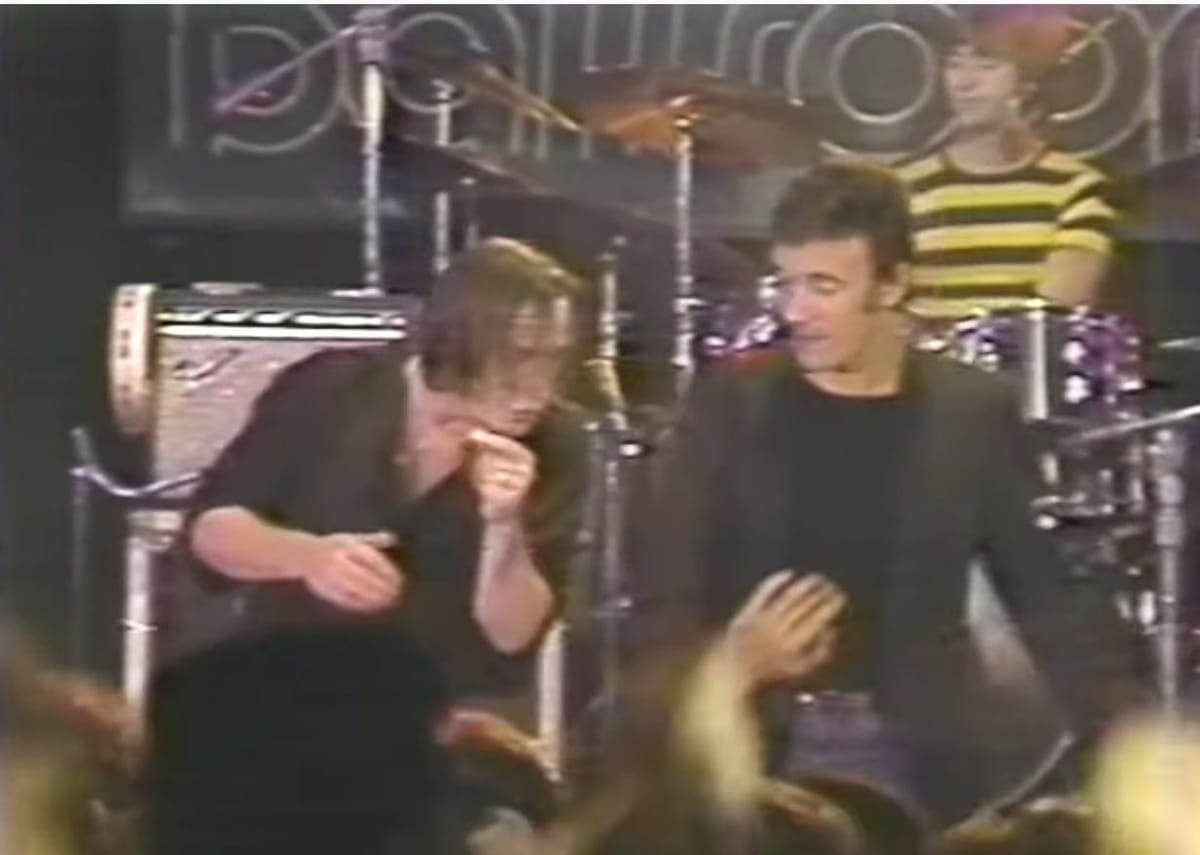
Worth pointing out is that someone has recently remastered the video footage when Bruce, Steve & Clarence showed up at the Southside & the Jukes show at the Agora the same night as their show at the Richfield Coliseum on 8/31/78 - I've updated the link to the new footage in the post about that night.
 Caryn Rose